
Quality control for a mobile accessories distributor is the process of separating defect causes before approving a remedy, then using the pattern of those causes to stop the next batch from repeating them. The cost of a return is not the unit — it is the unit, the freight both ways, the staff time, and the retailer’s willingness to stock your line again.
Key takeaways
- Classify the cause before approving a remedy. Manufacturing defect, transit damage, misuse, compatibility mismatch, and preference returns are five different problems with five different fixes.
- Inspect at three points: specification approval, in-process where agreed, and pre-shipment. A single pre-shipment inspection cannot catch a specification error.
- Product information is a quality control document. Consumers who return goods because the description was wrong are not a support problem — they are a content problem.
- Measure claims by model, batch, and supplier, not in aggregate. An overall return rate hides the one model that is destroying your margin.
- Write the claims process before you need it. A warranty argument in the middle of a retail dispute is expensive in a way that a signed scope never is.
Why do returns cost more than the replacement unit?
Because the visible cost — the unit — is the smallest part. The rest is distributed across freight in both directions, the labour to process and re-test, the working capital tied up in stock that cannot be resold, and the retailer’s judgement about whether your line is worth the shelf space.
There is also a measurement problem. Aggregate return rates are almost useless because they average together causes that have nothing to do with each other. A distributor with a 6% return rate might have 1% manufacturing defects and 5% expectation failures — and those two numbers call for completely different investments.
Retail research points at the second category more strongly than most suppliers assume. In Akeneo’s 2025 consumer survey, nearly 60% of consumers reported having returned a product because its description was inaccurate or misleading. That finding covers retail consumers broadly and is not specific to mobile accessories, but the mechanism transfers directly: a listing that overstates battery life or charging speed generates returns that are recorded as quality problems and are not.
How do you classify a defect before approving a claim?
Separate the cause into one of six categories, and make the category the first field on the claims record:
- Manufacturing defect — the unit does not perform to its own approved specification.
- Transit damage — packaging or product damaged between dispatch and receipt.
- Misuse or out-of-spec use — wrong charger, wrong voltage, physical damage, liquid ingress.
- Compatibility mismatch — the product works as designed but not with the customer’s device.
- Description mismatch — the product does not match what the listing, catalogue, or salesperson said.
- Preference return — change of mind, gift return, no fault.
Category 5 is the one distributors under-record, because it arrives disguised as a complaint about quality. A customer who says “it doesn’t charge fast” may be reporting a genuine defect, or may be reporting that the listing implied 65W when the unit delivers 20W. Those require opposite responses: one is a supplier claim, the other is a content correction.
The record itself needs a fixed minimum: model, batch or order reference, purchase date, symptom in the customer’s words, photographs or video, retailer’s own description, and the category assigned. Without the batch reference, no pattern is visible and no supplier claim is defensible.
What should be checked, by product category?
The check protocol follows the failure modes of the product, and the failure modes differ substantially across the range. The table below is a starting point for building a model-specific protocol — it is not a substitute for the approved specification and the applicable standards.
| Category | Key checkpoints | Most common failure modes |
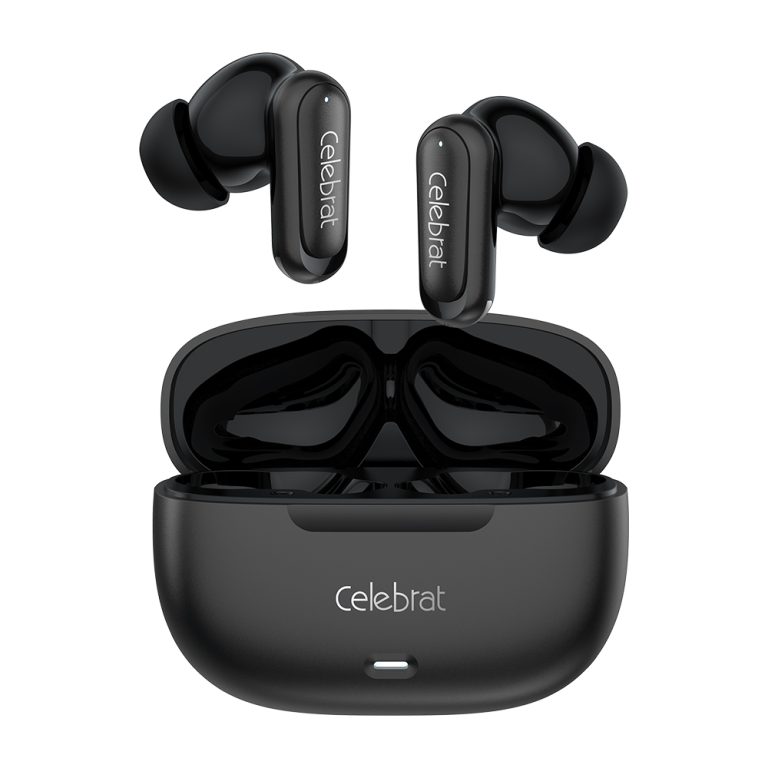
| TWS earbuds | Pairing, case charging, left/right audio balance, microphone, touch controls, case lid and hinge | One channel failing, case not charging, pairing dropouts, control mis-touch |
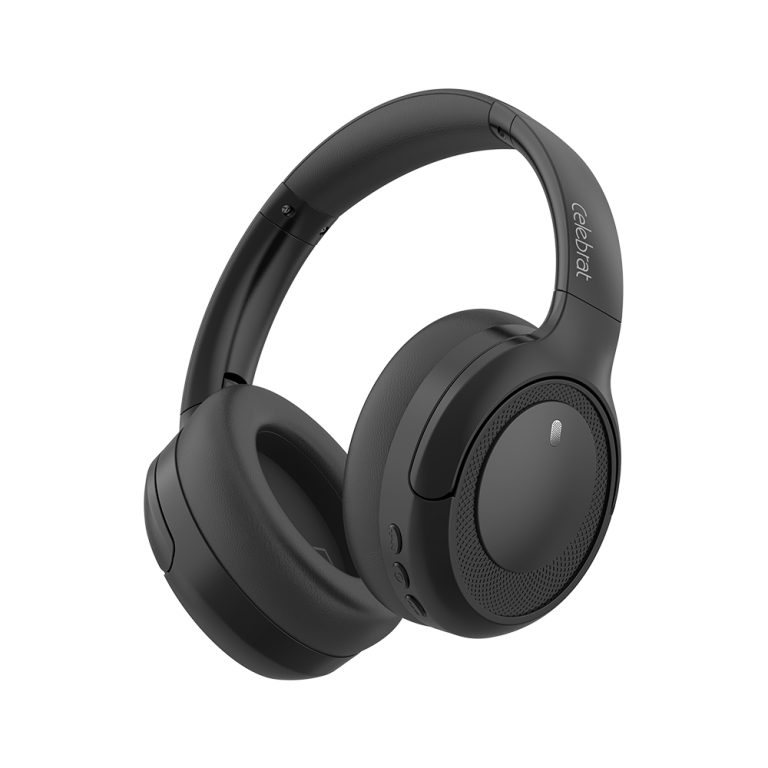
| Over-ear / neckband | Fit and clamping force, buttons, port condition, charging, call performance | Hinge and headband fatigue, mic performance in calls, port wear |
| Wall and car chargers | Input/output ratings under load, connector condition, temperature behaviour, safety documentation | Under-delivery versus rated output, overheating, loose connector retention |
| Cables | Connector fit and retention, charge and data function, strain relief at both ends, jacket integrity | Failure at the strain relief, data-only or charge-only mismatch, connector oxidation |
| Power banks | Capacity versus labelled capacity, charging and pass-through behaviour, transport documentation | Capacity shortfall versus label, cell degradation, port failure |
| Speakers | Audio output, controls, charging, wireless connection stability | Battery life shortfall, Bluetooth dropouts, control failure |
Two things about this table matter more than the rows. First, the test must be against the approved specification for that model, not against a generic expectation — a charger rated at 20W that delivers 18W under load may be entirely within spec, or entirely outside it. Second, the protocol should name the sample size and the acceptance criteria before inspection begins, or the inspection produces an opinion rather than a decision.
When should inspection happen?
At three points, because each catches a different class of failure:
Before production — specification approval. Approve the specification, the golden sample, the packaging artwork, and the label content. This is the cheapest inspection point and the most commonly skipped. A labelling error caught here costs a reprint; caught after shipment it costs a recall.
During production — the agreed in-process checks. Agree in advance which checks the supplier performs, at which stage, and what evidence is sent. If a supplier cannot describe their in-process checks, that is itself the finding.
Before shipment — pre-shipment inspection. Check quantity, appearance, function, packaging, and documents against a sampling plan sized to the risk.
AQL sampling is the standard tool for the third point, and it needs one clear caveat: AQL is an acceptance decision under defined criteria, not a guarantee that every unit is conforming. A passed inspection at a stated AQL still ships defectives — it ships an acceptable number of them. Anyone who reads an AQL pass as “zero defects” will eventually write a warranty term they cannot honour.
The supplier side of this — how the partner was vetted before the first order — is covered in how to choose a Chinese mobile accessories supplier.
Why is product information part of quality control?
Because a large share of returns is generated before the product is opened. Specs, compatibility notes, battery claims, charging wattage, and photographs form the customer’s expectation, and the return is the gap between that expectation and the product.
The practical rule is one approved master record per model — same name, same specification, same compatibility statement, same images, same warranty wording — used identically on the website, in the catalogue, in the quotation, in the sales kit, and in retailer training material.
Where distributors most often lose money:
- Battery capacity and playtime quoted as a best-case figure rather than a typical one
- Charging speed quoted at the wall rather than at the device, when the device is the constraint
- Wireless range quoted in open air rather than through a wall
- Compatibility stated as a brand list rather than a model list, which invites the customer to assume it covers their model
- Photographs showing an accessory or a cable length that is not in the box
None of these is a manufacturing defect. All of them generate returns that are processed, shipped, and written off as quality cost. Fixing them is an editorial task with a measurable return on investment, which is unusual.
What does a five-step claims workflow look like?
Make it a fixed sequence, and publish the response targets internally:
- Acknowledge the case within the agreed window. The acknowledgement is a timestamp, not a resolution.
- Collect evidence — order reference, model, batch, symptom description, photographs or video.
- Classify the cause using the six categories above.
- Decide the remedy under the written warranty terms: replace, credit, repair, or decline with a reason.
- Record the outcome by model, batch, and supplier, and route it into the trend review.
The fifth step is where the process earns its keep. A claims log that ends at “resolved” produces cost. A claims log that ends at “pattern” produces a supplier conversation, a specification change, or a delisting.
Never promise a replacement, refund, or warranty period beyond the written agreement — and never let a salesperson improvise one on a retail visit. An improvised promise becomes the standard the retailer expects from then on.
Which quality metrics are worth tracking?
| Metric | What it detects | Cadence |
| Defect rate by model | Whether a specification or a batch is failing | Monthly |
| Warranty claim rate | Whether the warranty is priced correctly | Monthly |
| Return rate by cause category | Whether the problem is manufacturing or expectation | Monthly |
| Time to first response | Whether the workflow is operating | Weekly |
| Time to resolution | Whether remedies are actually being delivered | Weekly |
| Replacement and freight cost | The real cost of quality failure | Monthly |
| Repeat complaint rate by retailer | Whether fixes are working | Quarterly |
For context on scale: Warranty Week’s 23rd Annual Product Warranty Report, which tracks US-listed manufacturers across 18 industry groups, put the average warranty claims rate at 1.30% of product sales revenue in 2025. That is a cross-industry figure covering vehicles, electronics, and building trades — not a mobile accessories benchmark — but it is a useful orientation: a claims rate materially above the low single digits is worth investigating, whatever the category.
FAQ
Does an AQL inspection guarantee zero defects?
No. AQL is a sampling method for making an acceptance decision under defined criteria. A lot can pass at the agreed AQL and still contain defective units. If your warranty terms assume a passed inspection means no defects, the terms are wrong, not the inspection.
What evidence should a retailer provide for a claim?
At minimum: order or invoice reference, model, batch if available, a description of the symptom in the customer’s own words, and clear photographs or video. Anything beyond that depends on the failure type and the warranty terms — for intermittent faults, a short video is worth more than any written description.
Should every return be treated as a product defect?
No, and treating them all as defects is expensive in two directions. It triggers supplier claims you will lose, and it hides the expectation failures that are entirely within your control to fix.
Who pays for return freight?
Whoever the written agreement says. The mistake is not choosing a particular allocation — it is leaving the question unanswered until a retailer is holding faulty stock and a shipment deadline. Agree the split by cause category: defect, transit, and preference returns rarely warrant the same treatment.
How long should a warranty period be for mobile accessories?
Long enough to match how the product is used and short enough that the claim rate stays inside your cost model. Cables and chargers are typically warrantied for a shorter period than audio products. Set it per category, write it down, and make sure the number in the catalogue matches the number in the contract.
Sources
- Akeneo, 2025 Consumer Returns Report — https://www.akeneo.com/white-paper/2025-consumer-returns-report/. A global consumer survey on the reasons for returns, including the finding that nearly 60% of consumers have returned a product because its description was inaccurate or misleading. Consumer research across retail categories, not a mobile accessories study.
- Warranty Week, 23rd Annual Product Warranty Report (16 April 2026) — https://www.warrantyweek.com/archive/ww20260416.html. Warranty claims, accruals, and reserves disclosed by US-listed manufacturers across 18 industry groups; 2025 average claims rate 1.30% and average accrual rate 1.43% of product sales revenue. Not a mobile accessories distributor benchmark.
- The inspection protocol, claims workflow, and metric list in this article are operating recommendations. Confirm applicable product standards and CELEBRAT’s current warranty terms before publication.