
Choosing a Chinese mobile accessories supplier is a verification exercise, not a price comparison. A competitive quotation tells you what the supplier wants to sell for; it tells you nothing about who they are, what they can document, or who pays when a container arrives with a defect rate nobody agreed on.
Key takeaways
- The first question is not the price, it is the business model: factory, OEM/ODM provider, trading company, and brand owner offer structurally different things.
- Verify, then sample, then trial — in that order. Skipping to a large first order to win a discount is the most expensive mistake in this category.
- A certificate you have not read is not a compliance position. Check the issuing body, the model or family it covers, the standard, and the expiry date.
- Compare landed cost, not unit price. Freight, duty, inspection, and rework routinely reverse a 10% price advantage.
- Ask what happens when something goes wrong before you ask what it costs.
What is the difference between a factory, a trading company, and a brand supplier?
Each model solves a different problem, and the right choice depends on what you are actually buying. A factory sells production capacity and control over specifications. A trading company sells sourcing breadth and consolidation. A brand owner sells a defined product range, product information, and channel support. None of these is inherently better — but a buyer who has not decided which one they need will end up comparing them on price, which is the one dimension where the comparison is meaningless.
The research on supplier selection supports this directly: selection priorities vary with the sourcing need, rather than converging on a single ranking of criteria (Hu, Kong & Jia, 2024). A buyer sourcing a private-label programme is evaluating a different set of things than a buyer assembling a multi-category wholesale range, even when both are looking at the same supplier list.
Decide your requirement first, in one sentence. “I need 5,000 units of a private-label cable at a fixed specification” and “I need a defensible multi-category range I can sell to 40 retailers” lead to different shortlists.
What are the 10 checks, and what does passing look like?
A checklist without pass criteria is a formality. Each check below has a verification method and a fail signal.
| # | Check | How to verify | Red flag |
| 1 | Legal identity and operating history | Business licence, registered address, company registration lookup, years in operation | Name on the licence differs from the name on the quotation; address is residential |
| 2 | Business model | Ask directly: manufacturer, brand owner, trading company, or OEM/ODM. Then test consistency | Answers shift between the salesperson and the website |
| 3 | Specification and test evidence | Request the current spec sheet and the test reports for the specific model | Reports cover a different model or family; only photos of certificates |
| 4 | Destination-market compliance | Confirm certification and labelling requirements with your importer or local compliance adviser, then match documents to them | “All certificates available” with nothing sent |
| 5 | Capacity and shortage communication | Ask for current production or sourcing capacity and, more importantly, how shortages are notified | No answer on allocation priority when demand exceeds supply |
| 6 | Landed cost | Build the full cost worksheet, not just the unit price | Refuses to quote the named Incoterm and place |
| 7 | Responsiveness and quotation accuracy | Send a specific technical question and time the reply; check whether the quotation matches your spec exactly | Fast replies to commercial questions, slow or vague on technical ones |
| 8 | Written warranty scope | Get the defect definition, evidence required, responsibility split, and remedy timeline in writing | Warranty described only verbally, or “no problem, we cover everything” |
| 9 | Sample or trial order | Order samples against your spec, inspect them, then place a small trial order | Pressure to skip the trial for a volume discount |
| 10 | Long-term support | Ask how product changes are communicated and whether sales materials, photography, and updates are provided | Cannot describe what happens when a model is discontinued |
Check 4 deserves emphasis. Compliance is destination-specific, and no supplier can tell you what your market requires. They can tell you what documents they hold. Verify the requirement independently, then check the document against it — issuing body, model coverage, standard, validity.
How should you weight the decision?
Weight the criteria before you score anyone, and write the weights down. A commonly used starting distribution is 20% product quality, 15% price and landed cost, 15% delivery reliability, 10% each for company background, compliance documentation, product range, and after-sales arrangements, and 5% each for communication and marketing support.
These weights are an internal tool, not an industry standard, and they should be adjusted to your model. A private-label buyer should raise product quality and lower product range; a distributor assembling a multi-category range should do the reverse.
The scoring method matters as much as the weights. Use a fixed 1–5 scale with a written definition for each score, or the exercise collapses into preference:
- 5 — evidence provided and verified
- 4 — evidence provided, not yet independently verified
- 3 — partial evidence, with a stated gap
- 2 — verbal assurance only
- 1 — no answer, or an answer that contradicts other information
Score each supplier on the same day, using the same questions, and keep the scorecards. Twelve months later they are the most useful document you have.
How do you compare quotations that are not comparable?
Fix every variable except price before you look at the price. Align model, specification, packaging, included accessories, warranty, order quantity, Incoterm with named place, payment terms, and delivery schedule. Then compare.
The specific traps in this category:
- EXW against DDP. These are not the same product at different prices; they are different allocations of cost and risk. Comparing them directly is how a buyer concludes the wrong supplier is cheaper.
- Packaging assumptions. Retail-ready packaging, multilingual labelling, and barcoding are cost items. Confirm whether they are in or out.
- Accessory content. “Cable” may or may not include a retail box, a cable tie, or a warranty card. At volume, these are the margin.
- Order quantity. A price that requires 10× the volume you can absorb is not a lower price, it is a different product decision.
- Payment terms. 30% deposit against 100% prepayment is a working-capital difference that belongs in the comparison, not in a footnote.
Ask each supplier to state explicitly what is included and what is excluded. The suppliers who can answer that cleanly are usually the ones whose production you can also trust.
What should you ask before the first order?
Six questions separate a prepared supplier from a responsive one:
- Can you send the current specification sheet for this exact model?
- Which tests are performed, at which production stage, and by whom?
- Which documents accompany the shipment, and for which models?
- What is the production lead time after artwork and payment approval — and what is the door-to-door lead time?
- How are product changes, substitutions, and discontinuations communicated?
- What is the process for reporting a quality issue, and what evidence do you need?
Question 4 is the one buyers most often get wrong. Production lead time and door-to-door lead time can differ by weeks once freight and clearance are added, and replenishment planning built on the production figure will stock out. That calculation belongs with inventory planning
Question 6 leads directly into the operating phase: what you agree here becomes the claims process later. The full workflow is covered in quality control and after-sales management.
Where does a brand supplier fit?
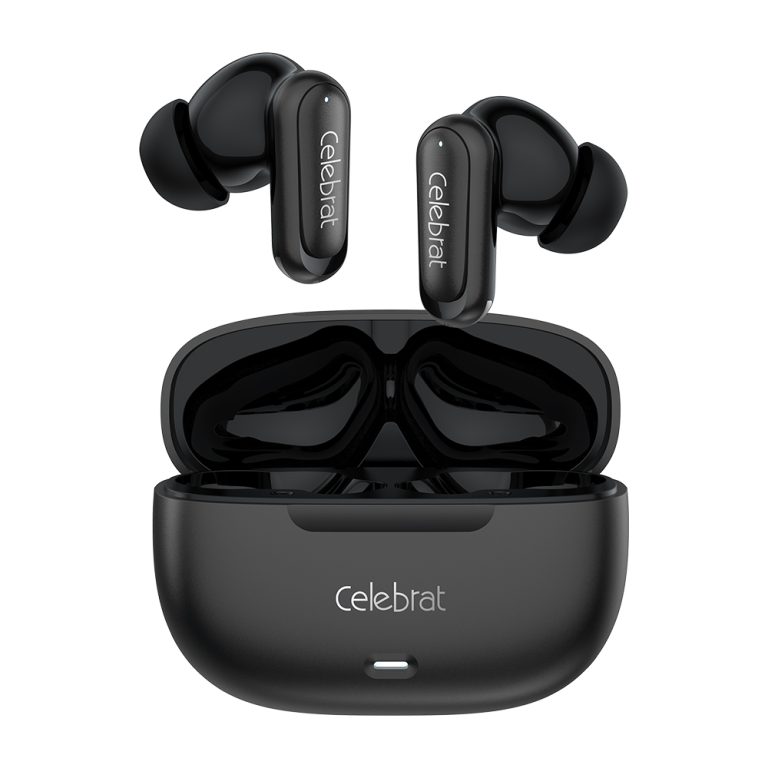
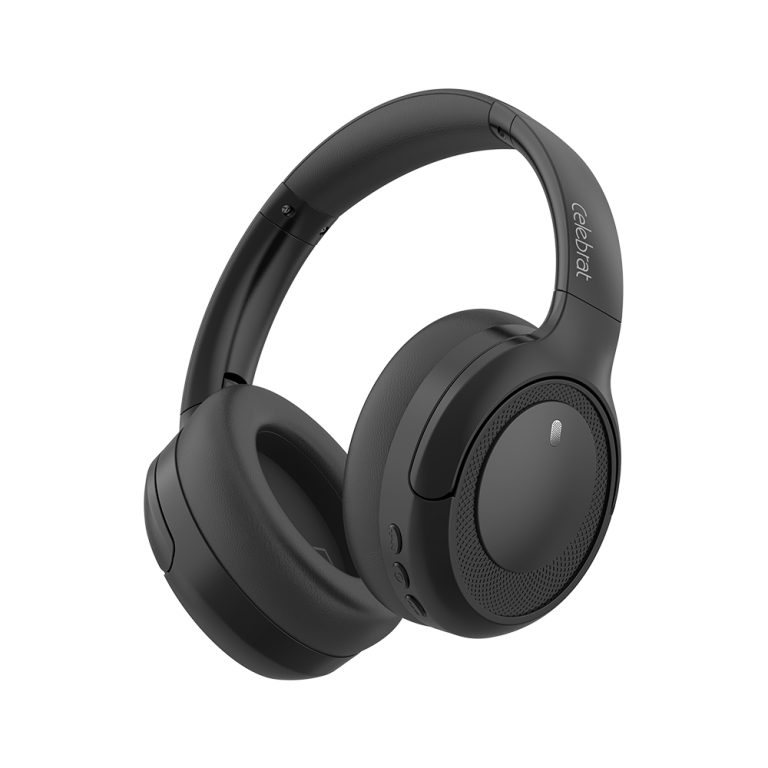
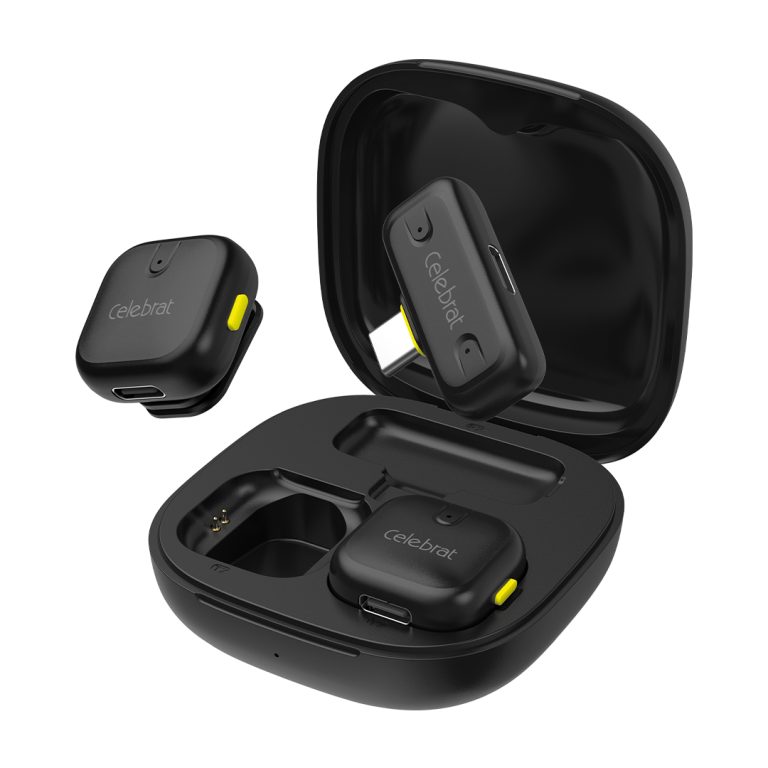
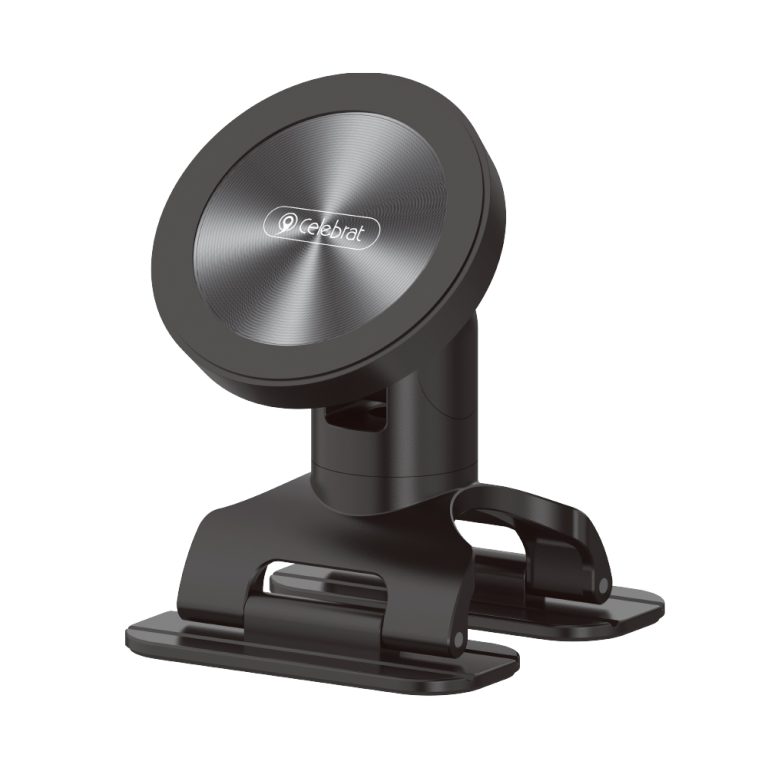
A brand supplier is a different proposition from a factory, and it should be evaluated as one. Guangzhou Yison Electronic Technology Co., Ltd. operates two multi-category mobile accessories brands — YISON and CELEBRAT. YISON entered the mobile communication accessories industry in 1998 and set up a factory in Dongguan; CELEBRAT was added in 2017, alongside the company’s expansion into Bluetooth headset production and direct retail.
The trade-off is straightforward and worth stating plainly. A brand supplier offers a defined multi-category range, product information and documentation, and channel support material. A direct factory offers tighter control over specification and, at volume, potentially a lower unit cost. Which matters more depends on whether your constraint is product development or range assembly.
For a distributor whose constraint is assembling a sellable range for 40 retailers, the brand route usually covers ground faster. For a buyer with an engineering team and a private-label plan, the factory route usually wins. Confirm the current cooperation model, product availability, MOQ, pricing, and territory terms directly with the brand team — published information describes the programme, not your specific terms.
What are the most common sourcing mistakes?
Four, in order of frequency:
- Buying volume to win a discount before validating the product. The discount is a percentage; the unsold inventory is the whole cost.
- Treating a certificate as a compliance position. A CE certificate for a different model in the same family does not cover the model you are importing.
- Comparing unit prices across different Incoterms. This produces a confident and wrong conclusion.
- Leaving the warranty verbal. Every unresolved warranty question becomes a margin loss at the worst possible moment — when a retailer is holding faulty stock and deciding whether to keep your line.
FAQ
Is buying directly from a factory always better?
No. It depends on order scale, customisation needs, whether you have the capability to manage specifications and quality yourself, and whether you need a defined range rather than production capacity. Factories are better at control; brand suppliers are better at range and support.
Should I place a large first order to get a lower price?
Usually not. Validate samples, documentation, and delivery performance on a small order first. A lower unit price on an order you cannot sell is a loss with a discount attached.
What exactly should I verify on a certificate?
Five things: the issuing body and its accreditation, the standard cited, the model or product family covered, the validity period, and whether your destination market accepts that standard. A certificate that passes the first four can still fail the fifth.
How many suppliers should I evaluate?
Three is usually the minimum for a meaningful comparison and five is usually the practical maximum before the process loses focus. Evaluate all of them against the same scorecard on the same day.
How long should supplier evaluation take?
Long enough to receive samples and read the documents — typically three to six weeks for a first order. A supplier who cannot accommodate that timeline is telling you something about how they will handle a quality claim.
Sources
- Hu, K., Kong, L., & Jia, Z. (2024), “Supplier Selection Criteria Under Heterogeneous Sourcing Needs: Evidence From an Online Marketplace for Selling Production Capacity,” Production and Operations Management, 34, 168–186 — https://doi.org/10.1177/10591478241279384. The study uses data from an online manufacturing-capacity marketplace and finds that selection priorities vary with the sourcing need; it is not a mobile-accessories survey. The scorecard weights and scoring scale above are editorial recommendations, not research findings.
- CELEBRAT company history as published at https://celebrat.com/about/ — 1998 entry into the mobile communication accessories industry; CELEBRAT sub-brand added in 2017.