

Product assortment for a mobile accessories wholesale business is the selection of SKUs, price tiers, and product roles that matches what your specific market actually buys — not what the brand’s global catalogue offers. A catalogue can hold hundreds of models; a distributor needs the twenty that keep reordering.
Key takeaways
- Build the range from local device reality: which connectors, which charging standards, which price points. Fewer assumptions, better hit rate.
- Every SKU needs a role — traffic driver, repeat purchase, margin contributor, bundle item, or test. A SKU without a role is a SKU without a reason.
- Segment by price tier and by role at the same time. A 3×5 matrix beats a flat list because it shows you the gaps.
- Test in small controlled batches with success criteria set before you order, not after.
- The right moment to expand is when the current range shows repeat demand. New model availability is not a signal.
Why does a global catalogue make a bad local assortment?
Because the variables that determine accessory demand are local. Connector type, charging standard, device price band, replacement cycle, retail format, and even how people charge — at the wall, in the car, from a power bank — differ enough between markets that a range that works in one will under-perform in another.
The reasoning chain that actually connects market data to SKU decisions has four steps, and it is worth walking deliberately because each step is where distributors skip ahead:
- Network generation — how much of the installed base is on 4G versus 5G, and how fast is the mix shifting.
- Device replacement cycle — how often the base turns over, which sets when new-port accessories are needed.
- Accessory replacement frequency — cables and chargers wear out faster than phones are replaced, so accessory demand follows installed base, not new device sales.
- SKU structure — which combinations of connector, wattage, and price tier that produces.
Skipping from step 1 to step 4 is how a distributor concludes that a market “needs” a premium fast-charge line because 5G penetration is rising.
GSMA’s Mobile Economy 2025 report offers a useful illustration of why regional differences matter. It estimated that 58% of the world’s population used mobile internet at the end of 2024, and its regional data showed 2024 5G connections at roughly 7% in MENA and 2% in Sub-Saharan Africa, against 55% in North America.
| Region | 5G share of connections (2024) | What it implies for accessories |
| North America | ~55% | Fast-charge, higher-wattage and premium audio carry real volume; USB-C is the default |
| MENA | ~7% | Mixed base; entry and mid-tier carry volume, premium is a test line |
| Sub-Saharan Africa | ~2% | 4G and legacy connectors dominate; entry-tier charging and durability matter most |
Those figures describe connection mix, not accessory demand — they are market context only. But they establish the first link in the chain: a market where 5G is 2% of connections is not a market where a 65W GaN charger is the traffic driver.
How do you segment an assortment by price and role?
Run two dimensions at once. Price tier sets what the customer can afford; role sets what the SKU does for your business. Products that fit neither are the ones that end up aged.
Price tiers: entry (price-sensitive, high rotation, thin margin), core (the dependable volume band), premium (feature and design led, slower rotation, higher margin).
SKU roles: traffic driver, repeat-purchase item, margin contributor, bundle item, seasonal test.
| Entry tier | Core tier | Premium tier | |
| Traffic driver | Basic cable, basic wall charger | Fast-charge cable, 20W charger | — |
| Repeat purchase | Cable multipacks | Charger and cable combos | Replacement eartips, carry cases |
| Margin contributor | — | Branded charging set | ANC audio, high-capacity power bank |
| Bundle item | Car charger + cable | Charging + audio gift set | Premium audio + case |
| Seasonal test | Holiday multipacks | Back-to-school combos | Limited colourways |
The gaps in that matrix are as informative as the entries. A market with no premium traffic driver is normal and correct — premium products rarely drive footfall in this category. A market with an empty repeat-purchase row at every tier is a warning: you have no reason for customers to come back.
The matrix also prevents a specific failure: filling the catalogue with near-identical models that compete for the same customer. Three 20W chargers at the same price point with different mouldings is one product decision made three times, and it triples your ageing-stock exposure for no additional reach.
Which categories should be tested, and in what order?
Audio and charging first, because they carry the highest replacement frequency and the clearest repeat purchase. Cables as the volume base. Power banks where the use case exists. Wearables and car accessories last, and only on evidence.
Category-specific considerations that change the buying decision:
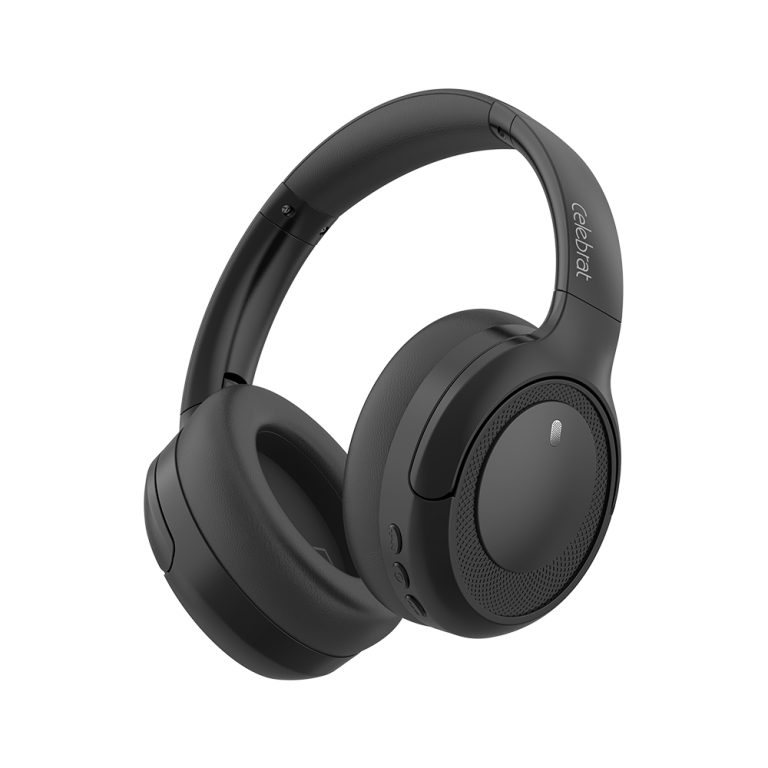
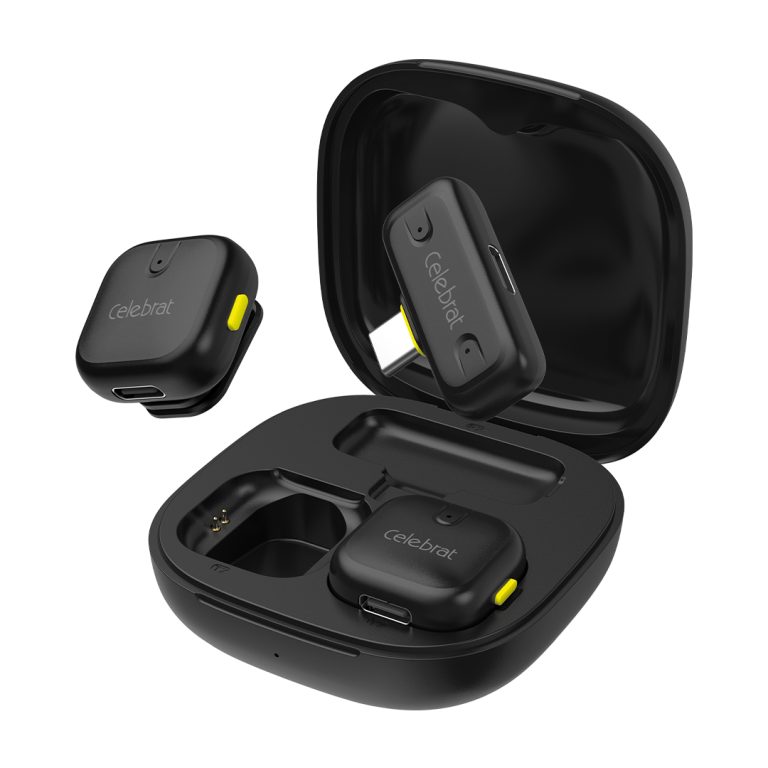
- Audio — TWS, wired, neckband, over-ear, and speakers occupy different price points and use cases. Do not treat “audio” as one category; a market can support strong TWS volume and near-zero over-ear demand simultaneously.
- Charging — plug type and supported output are the gate. Confirm local plug standards and whether fast-charge protocols are device-specific in your market.
- Cables — connector combinations, length, and durability. Cable failure at the strain relief is the single largest returns driver in the category.
- Power banks — capacity labelling rules, air transport restrictions, and applicable certification. This is the category where a documentation gap stops a shipment.
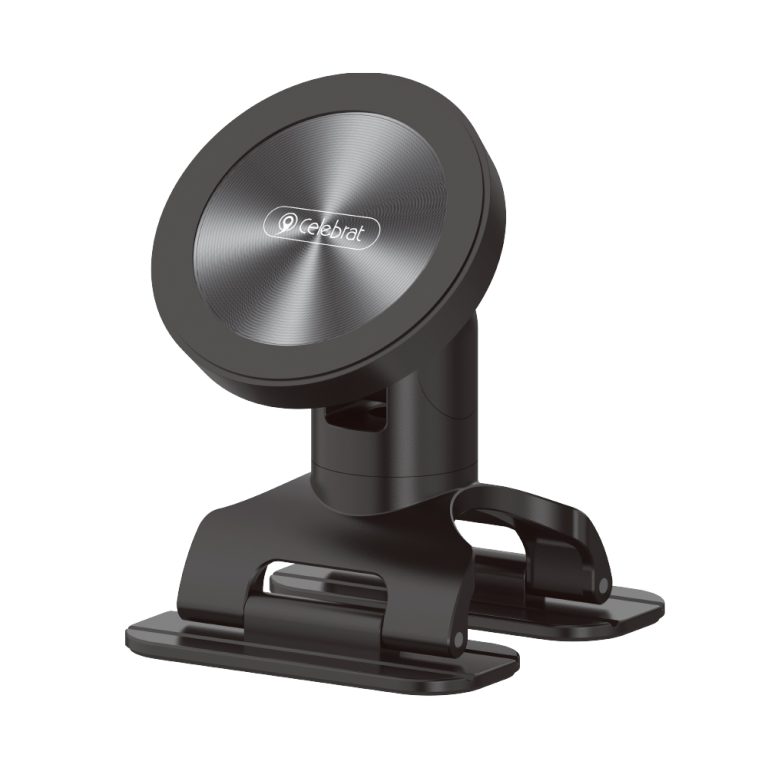
- Wearables and car accessories — add only where retailer feedback and market evidence justify it. These are the categories distributors most often add because the brand offers them.
How do you use retailer feedback as evidence?
Ask a small group of retailers in different channel types the same five questions, and record the answers. Feedback becomes evidence when it is specific enough to compare against invoices.
- Which products do you sell every week, without prompting?
- Which price points move fastest?
- What do customers return, and what reason do they give?
- Which models do customers ask for that you do not stock?
- Which products are difficult to explain at the counter?
Question 5 is the most valuable and the least asked. A product that cannot be explained in fifteen seconds at a retail counter will not sell regardless of its specification — and it usually signals a product-information problem rather than a product problem. That is an editorial fix, covered in quality control and after-sales management.
Cross-check the answers against invoices, repeat orders, and sell-through data. Retailers describe intention; invoices describe behaviour. Where the two disagree, trust the invoice.
How do you run a controlled assortment test?
Set the test up before you order, in writing, with four elements:
- A defined test range — small enough to be affordable, broad enough to learn something.
- A fixed review period — typically one to two replenishment cycles.
- Success criteria stated in numbers — units per week, gross margin, stockout rate, return rate, reorder requests.
- A decision rule for each outcome — keep, revise, or discontinue.
Then track it. The disciplines that make the difference:
- Judge on repeat orders, not first orders. A first order measures the retailer’s optimism; a second order measures the customer.
- Separate stockout rate from low sales. A SKU that sold poorly because it was unavailable has not been tested.
- Let the test run its full period. Cutting a test short at the first slow week produces the same conclusion as not testing.
- Discontinue on the decision rule, not on sentiment. Products that repeatedly miss target are consuming shelf space that a tested performer could use.
Where does a brand range fit into the assortment?
A brand range offers something a loose sourcing list does not: a defined architecture across categories, so the range holds together as a commercial proposition rather than a pile of unrelated SKUs. For CELEBRAT, that means audio and charging as the anchor categories, with cables, power banks, and selected lifestyle accessories around them.
The practical approach for a distributor is to use the brand architecture as the skeleton and the local test as the muscle. Start with the models that match your market’s price bands and connector reality, request the current catalogue, specifications, order quantities, packaging details, and destination-market documentation, and validate suitability locally.
CELEBRAT’s published distributor programme also includes material support that changes the cost of a test — product 3D assets, social media content templates, and joint promotion planning. For a distributor whose constraint is the cost of building retail-facing content, that is worth pricing into the decision rather than treating as a bonus. Confirm the current scope with the brand team.
Stock depth per SKU is a separate decision from range selection, and getting it wrong is what turns a good assortment into aged stock: see how to manage inventory and avoid overstocking. Pricing the resulting range is covered in landed cost and wholesale margin.
FAQ
Should I offer the same products in every country?
No. Device mix, price sensitivity, network generation, plug standards, and regulation vary enough that a single range under-serves most markets. Keep a consistent brand architecture and vary the SKU depth beneath it.
How many models should a new distributor test?
Enough to cover each role in the matrix at the tiers that matter locally, and no more. There is no universal count — the constraint is the cash you can afford to have in stock at once, divided by the number of SKUs you can genuinely support with information and stock.
When should I expand the range?
When the current range shows repeat demand, healthy margin, and low stockout. Expanding in response to a new model launch, a supplier promotion, or a competitor’s catalogue is the most common route to aged stock.
How do I know a product will not sell?
You do not, which is why the test exists. You can, however, recognise the products that are unlikely to: those that cannot be explained at the counter, those with no clear role in the matrix, and those whose price tier has no demonstrated demand in your market.
Does a wider range increase revenue?
Usually it increases inventory and complexity before it increases revenue. Range breadth pays when each addition has a role and a stock depth it can justify. Without that, a wider range simply distributes the same sales across more SKUs and a larger cash commitment.
Sources
- GSMA, The Mobile Economy 2025 — https://www.gsma.com/solutions-and-impact/connectivity-for-good/mobile-economy/wp-content/uploads/2025/04/030325-The-Mobile-Economy-2025.pdf. Figures cited: 58% of the world’s population using mobile internet at end-2024; 2024 5G connections at approximately 7% in MENA, 2% in Sub-Saharan Africa, and 55% in North America. These describe mobile connection mix, not accessory purchase demand, and are used as market context only.
- CELEBRAT distributor programme material support as published at https://celebrat.com/about/ — verify the current scope of 3D assets, content templates, and joint promotion support before citing it in a partner discussion.
- The price-tier and role matrix, test protocol, and retailer questions are operating recommendations, not research findings.