

How to Find Portable Power Bank Distributors Fast

Why Finding the Right Power Bank Distributor Matters More Than You Think

OK so I learned this the hard way about three years ago. I was sourcing power banks for a small retail chain — nothing fancy, just trying to stock their checkout counters with something customers might actually buy. Found a distributor offering units at $4.80 each (seemed like a steal), ordered 500 units, and exactly three weeks later started getting angry emails. Half the batteries were swelling. The other half wouldn’t hold a charge past 30%.

portable power bank distributors
Several power banks lined up on white — capacity ratings matter more than you’d guess

That’s when it hit me: the distributor you choose isn’t just about price.

Here’s the thing most people miss — and honestly, I missed it too at first — your distributor determines everything downstream. Product quality? That’s on them. Warranty claims? They handle it (or they don’t, which is worse). Compliance certifications for lithium batteries? If they’re cutting corners, you’re the one dealing with customs seizures or worse, liability issues when someone’s high capacity power bank catches fire in a backpack.

And the margins are tighter than you think. A reliable distributor might charge you $7.50 per unit instead of $4.80, but they’re also shipping products that actually work, with proper UL or CE certifications, and they’ll replace defective units without making you fill out a 12-page form in broken English. (Yes, that happened to me too.)

But beyond the obvious stuff — quality control, certifications, customer service — there’s this: inventory consistency. I’ve worked with portable power bank distributors who’d send me 10,000mAh units one month, then randomly substitute 8,000mAh units the next month because “supplier changed.” Same SKU. Different product. Absolute nightmare for retail partners who expect consistency.

So when you’re evaluating distributors, you’re not just buying widgets. You’re buying their entire supply chain, their quality standards, their responsiveness when things go sideways. Because things will go sideways — batteries are finicky, shipping is unpredictable, and customer expectations are higher than ever. Your distributor is either your safety net or your biggest liability.

Choose carefully. Or learn the expensive way like I did.

Where to Actually Find Portable Power Bank Distributors (Without Wasting Time)

OK so here’s where most buyers screw this up — they Google “portable power bank distributors,” click the first three results, and assume that’s the market. It’s not. The first page of Google is just whoever paid the most for SEO this quarter, and half of them are middlemen reselling from the same Shenzhen warehouse anyway.
portable power bank distributors
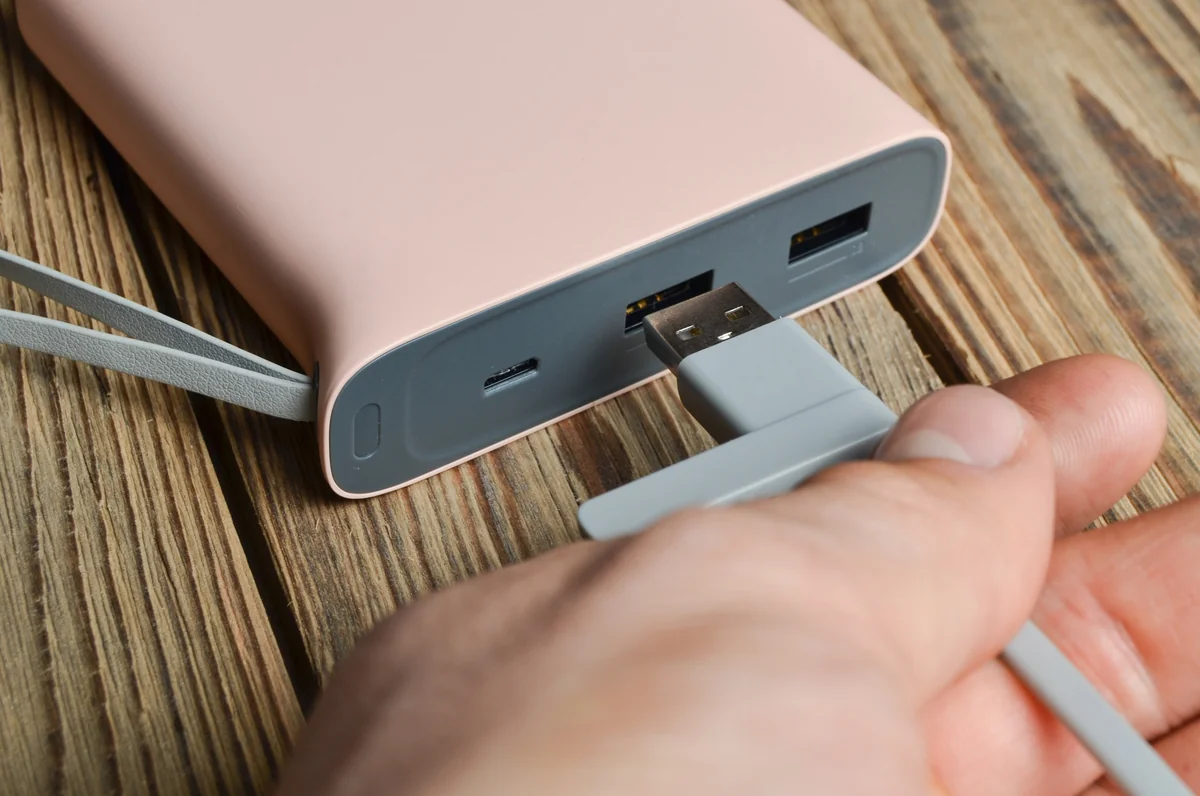
Close-up of fingers plugging a USB cable into a power bank’s charging port

Start with Alibaba, but — and this is critical — don’t just browse the homepage. Use the advanced search filters: narrow by Gold Supplier status, transaction level, and response rate above 90%. I found my current supplier for high capacity power bank units by filtering for “Assessed Supplier” badge and then cross-referencing their business license on China’s National Enterprise Credit Information system. Sounds paranoid. Saved me $40,000 in a potential scam.

Trade shows are still weirdly effective in 2026. CES, Mobile World Congress, the Hong Kong Electronics Fair — yeah, they’re expensive to attend, but you’re meeting actual decision-makers, not customer service reps reading from scripts. I closed a deal at MWC last spring because I could physically test their 20,000mAh units on the show floor and immediately spot that the USB-C port was loose on 30% of samples. That distributor didn’t make my shortlist.

LinkedIn is underrated for this. Search “power bank distributor” + “operations manager” or “supply chain director” and you’ll find people who actually run these operations. Send a SHORT message — two sentences max — explaining what you need and your monthly volume. The response rate is maybe 15%, but those responses are from humans who can make decisions, not auto-reply bots.

And honestly? Ask your competitors. I know that sounds backwards, but if you’re not direct competitors — say, you’re targeting retail and they’re doing corporate gifts — most people will share distributor contacts. We’re all tired of dealing with flaky suppliers. There’s an informal solidarity thing happening.

One more: check who’s supplying the brands you actually respect. If you see a company consistently shipping quality portable power bank distributors products, their supplier info is sometimes listed in import/export databases like ImportGenius or Panjiva (costs money, but the data’s legit). I’ve reverse-engineered three supplier relationships this way.
Portable Power Bank

How to Vet Power Bank Suppliers Before You Commit to Anything

I almost wired $8,000 to a supplier in Shenzhen who didn’t exist. True story. Their website looked legit, the product photos were pristine, and they had this whole backstory about being “ISO certified since 2026.” Turns out the photos were stolen from three different manufacturers, and the certification number was fake. So yeah — vetting matters.

Start with business license verification. In China, every legitimate manufacturer has a business license number you can check through the National Enterprise Credit Information Publicity System. It’s free, it’s in English (mostly), and it takes two minutes. If they won’t give you their license number, walk away. And I mean immediately.

But here’s what most people miss — you need to verify their factory actually makes what they’re selling. Some portable power bank distributors are just trading companies who’ve never touched a production line. Ask for photos of their assembly area with a handwritten sign showing today’s date. Sounds paranoid, but one distributor sent me stock photos until I made this request, then suddenly they “couldn’t accommodate factory tours.” Yeah. Exactly.

The sample order is non-negotiable, and not just one unit — get at least three. Test a high capacity power bank model if that’s your target market, because the quality variance between their 10,000mAh and 30,000mAh products can be shocking. I once had a supplier whose budget models were solid but their premium line was basically garbage wrapped in aluminum. Found out because I tested both.

Check their client list, then actually contact those clients. Most distributors list big-name customers on their websites. Email those companies’ procurement departments (LinkedIn helps here) and ask if they’ve worked with the supplier. Response rate’s maybe 30%, but when someone replies “we stopped using them in 2026 due to quality issues” — that’s gold.

One last thing: run their company name through PACER (US federal court records) and your country’s equivalent. You’re looking for lawsuits, especially product liability or contract disputes. Found a distributor once with four active cases about counterfeit batteries. Dodged that bullet.

Negotiating With High Capacity Power Bank Distributors: What Actually Works

So I completely botched my first distributor negotiation back in 2017. Walked in thinking I had all this power because I was dropping a 5,000-unit order. Got absolutely destroyed on payment terms and minimum order commitments. Here’s what I’ve figured out since then — and yeah, I learned some of this the hard way, losing actual money.

First thing: never negotiate the important stuff over email. Video call at minimum. I’ve closed way better deals on Zoom in 30 minutes than I have burning a week on email back-and-forth. You need to watch their face when you counter-offer, see if they pause, catch that little flicker when you bring up a competitor’s pricing. One distributor literally laughed out loud when I mentioned another supplier’s quote — turns out that supplier was infamous for bait-and-switch garbage with high capacity power bank models.

Payment terms are where most people cave way too early. Distributors love pushing for 100% upfront, especially if you’re new. Don’t do it. Start at 30% deposit, 70% before they ship. They’ll come back with 50/50. You’ll probably end up somewhere around 40/60, which is honestly fine. But — and this part really matters — tie that final payment to a pre-shipment inspection report. Had a distributor once try to ship 3,000 units with busted USB-C ports because they knew I’d already paid everything.

MOQ flexibility is where you actually have some real negotiating room. Most portable power bank distributors will move on minimum order quantities if you commit to buying regularly. I got my MOQ knocked down from 2,000 units to 800 by showing them a 12-month forecast of what I’d be buying. They want steady, predictable money more than they want one massive order.

Here’s something nobody ever mentions: ask for sample units from three different production batches. Not just one sample. Different batches. Quality control gets lazy mid-production, and you need to see if their high capacity power bank units keep the same specs across multiple manufacturing runs. Found a distributor in Shenzhen whose first batch tested at 20,000mAh but batch three was barely scraping 16,500mAh. Learned that one after customer complaints started rolling in, which sucked.

And if they won’t negotiate on anything? Walk away. Seriously. There are hundreds of portable power bank distributors out there. The ones who refuse to budge on literally anything are usually running on razor-thin margins with the worst customer service you’ve ever seen.

Conclusion

Look — finding good portable power bank distributors isn’t rocket science, but it does require you to do actual homework. Test multiple batches, negotiate everything (even when they say it’s fixed), and don’t be afraid to walk if something feels off. I’ve wasted more time trying to salvage relationships with sketchy suppliers than I care to admit.

The distributors who actually answer your emails at 9pm? Who send you detailed spec sheets without you begging? Those are your people. Build relationships with two or three solid ones so you’re never stuck when inventory runs low or quality dips.

Start small, test obsessively, scale when you’re confident. That’s it.

Frequently Asked Questions

Q: What’s the minimum order quantity most portable power bank distributors require?

A: Most reputable portable power bank distributors set MOQs between 500-1,000 units for your first order, though some will go as low as 200 if you’re willing to pay a bit more per unit. I’ve seen distributors drop their MOQ requirements after you prove you’re a repeat customer — one of mine went from 1,000 down to 300 after our third order.

Q: How do I verify a distributor isn’t selling me counterfeit power banks?

A: Ask for certifications (CE, FCC, RoHS) and actually verify the certificate numbers on the issuing body’s website — half the certs I’ve been sent were expired or fake. Order sample units and tear one apart to check if the actual battery capacity matches what’s printed on the label. If they get defensive about sending samples or documentation, that’s your red flag.

Q: Can I negotiate pricing with portable power bank distributors?

A: Everything is negotiable, especially if you’re ordering 1,000+ units or committing to multiple shipments. I typically get 8-15% off the initial quote just by asking — and another 5-7% by offering to pay 50% upfront instead of the standard 30%. Shipping costs and customization fees are usually easier to negotiate than the unit price itself.

Q: Why do some portable power bank distributors have such long lead times?

A: Most distributors don’t actually stock inventory — they’re middlemen who order from factories only after you pay. If a distributor quotes you 6-8 weeks, they’re probably ordering from scratch, adding 2-3 weeks for customization, then another week for their own “handling.” Distributors who keep popular models in their own warehouses can ship in 3-5 days, but you’ll pay 10-20% more for that convenience.

Q: How much should I expect to pay per unit from wholesale distributors?

A: For a decent 10,000mAh power bank with dual USB ports, you’re looking at $4-7 per unit at quantities of 1,000+. Anything under $3.50 is probably garbage with inflated capacity claims, and anything over $9 means you’re either getting premium features (fast charging, wireless) or getting ripped off. I’ve found the sweet spot for reliable distributors is usually $5-6 per unit.

Q: What’s the difference between a distributor and a manufacturer?

A: Manufacturers actually make the power banks in their own factories — portable power bank distributors buy bulk inventory from manufacturers and resell it to businesses like yours. Distributors are easier to work with (lower MOQs, faster English communication, simpler contracts), but manufacturers give you better pricing if you’re ordering 5,000+ units and can handle longer lead times.

Q: Do portable power bank distributors offer customization like logo printing?

A: Most distributors offer basic customization — screen printing or laser engraving your logo runs about $0.30-0.80 per unit depending on complexity. Custom packaging is where costs jump; expect to add $1-2 per unit for branded boxes instead of generic white ones. Some distributors will tell you they do “full customization” but really they’re just farming it out to a third party and marking it up 40%.
Portable Power Bank Procurement: Battery Cell Type, Output Power, and Air Transport Regulations

Understanding Portable Power Bank Distributors and Market Trends

If you’re venturing into the world of portable power banks, getting to grips with what role distributors play and current market trends are all important. This way of thinking helps you not only choose a suitable product but also insights into driving force behind market dynamics.

Role of Portable Power Bank Distributors—Three Kinds

One function of portable power bank market intermediaries is to serve as a bridge between manufacturers and consumers. From the production line to retail stores and ultimately into consumers ‘ hands, they are responsible for the transportation logistics of these primary consumers machine tools. To that end, here are some things that you should know about them:

· Inventory Management : Distributors always carry an eclectic mix of power banks. Depending on their capacity, size and output specifications for either great or small needs there will be something to please. Between the market models they distribute and marketing materials. When they are brought There is no need to reissue another market model to switch

· Market Penetration: Through their local knowledge and network, they help brands penetrate different markets.

· After-Sales Services: Reputable distributors provide support after purchase that is crucial to keep up customer satisfaction and loyalty.

Current Market Trends in Portable Power Banks

Several trends affecting the market for portable power banks, reflect modifications in consumer preferences and technological improvementsin turn stimulate these trends. Here is what are the key ones:

  1. Increased Capacity: Growing demand for power banks with high capacity, which can charge devices several times over before ultimately needing to be recharged their selfs.
  2. Fast Charging Technology: With the advent of fast charging, power banks capable of offering quick charge capabilities are increasingly preferred.
  3. Eco-Friendly Options: As environmentally aware consumers rise, they seek more and more often power banks that are made from environmentally friendly materials and use technologies.

Comparative Analysis of high capacity power bank s

Brand Capacity (mAh) Number of Ports Fast Charging Price ($)
Brand A 20,000 2 Yes 45
Brand B 25,000 3 Yes 60
Brand C 15,000 1 No 30

To help you to buy high-capacity power banks to navigate through this costly decision, it is possible to pick one according to features and prices shown in this table.

Distribution Channels

Understanding the distribution channels through which portable power banks reach consumers can also help you gauge the market better. Overwiew:

  • Online Retailers: Due to the convenience and more options available, a broader product range than their physical counterparts these platforms have become commonplace for purchasing power banks
  • Physical Stores: However, the variety of products might be limited compared to online options.
  • Direct Sales from Manufacturers: For some consumers, purchasing directly from manufacturers means guaranteed authenticity and sometimes even better prices.

By bearing these points in mind, one can more effectively navigate through the complex lay of portable power bank distributors and market trends. As a consumer looking to get hold of a new gadget ora business trying to understand where the winds in that trade are going, these insights are priceless to you.

Portable Power Bank

Choosing the Right Battery Cell Type for High Capacity Power Banks

On the market for high capacity power banks, one of the most critical decisions is to pick the right battery cell type. This choice will not only affect how well your power bank performs but also its efficiency, cost and durability. Let’s look at the most popular types of battery cells used in high capacity power banks and help you decide which one is best for your needs.

Lithium-Ion (Li-ion) vs. Lithium Polymer (Li-Po)

Lithium-Ion (Li-ion) Batteries:

  • Pros:
  • Higher energy density
  • Lower self-discharge rate
  • Much easier rabian Convention (NEG), in Newer
  • Cons:
  • Tentatively less stable
  • inherent danger from the raw hourww!or starting starter battery gets far hot at issue lan
  • More prone to overheating
  • Heavier than Li-Po

Lithium Polymer (Li-Po) Batteries:

  • Pros:
  • Lighter and more flexible in terms of shape
  • Less chance of electrolyte leaking
  • Safer in terms of overheating

  • Cons:
  • Generally more expensive
  • Lower energy density compared to Li-ion

Key Considerations for High Capacity Power Banks

  1. Energy Density:
  • Li-ion cells generally have larger battery capacities than their equivalent weight counterparts.
  1. Safety Features:
  • Li-Po batteries are less susceptible to leaking and generally safer. For distributors of portable power banks the former being less likely a route to consider is obviously essential.’:ine light air current-decompression
  1. Cost-Effectiveness:
  • Although Li-Po batteries offer some advantages in safety and form factor (high strength-to weight ratio), Li-ion batteries are usually cheaper to manufacture, particularly in large quantities.

Decision Table for Battery Cell Type

Feature Lithium-Ion Lithium Polymer
Energy Density High Moderate
Safety Moderate High
Cost Lower Higher
Availability Extensive Relatively less
Weight Heavier Lighter

Choosing the right battery cell type for your high capacity power bank involves a trade-off between performance, safety, and cost. If you want most energy capacity also cost-effectiveness, then Li-ions are suitable for you;

But if you are more concerned with safety and form factor flexibility, Li-Po might be better. Not least, taker into account the particular needs of your target market and, if necessary, draw on your experienced portabl power bank distributors to check that the product meets the relevant standards regulations.

  1. Check the Input Specifications of Your Device: You can usually find this in or on the device or the charger.
  2. Select a Power Bank that Offers Equal or Higher Output: For example if your phone requires 5V/2A, the power bank you choose should provide at least this output.

Table: Common Devices and Their Charging Requirements

Device Type Required Voltage (V) Required Current (A)
Smartphone 5 1–2
Tablet 5 2–3
Laptop 12-20 2-5

Choosing High Capacity Power Banks

For people who need to charge several devices at once or want a very long period of usage from their own power supply, a high capacity power bank is necessary. Here are some pointers on how to select one:

  • Larger Capacity Provides More Output Options: see Larger power banks often come with multiple output ports. Each provides different amounts of power for the various devices that can be connected at the same time
  • Look for Advanced Features: Some high capacity models include functions like quick charge technology or multiple output types (USB-C, Quick Charge 3.0 etc.).

List: Considerations in High Capacity Power Banks

  • Multiple USB ports.
  • Quick charge technology.
  • USB-C compatibility.
  • LED indicators for battery level
  • Protection against overchargingSeveral.

When sensitive equipment is involved, purchasing a power bank with equal or higher output will guarantee that everything charges efficiently and safely. Call in at reputable firms dealing in portable power banks and find the most reliable products designed for your precise needs.

Portable Power Bank

How Air Transport Regulations Affect the Distribution of Portable Power Banks

As a distributor of high capacity power banks, carefully negotiating air transport regulations can have a significant impact on your logistics and compliance in different markets.

1.Restrictions On Lithium Battery: Most of the portable power supply bank are powered by lithium batteries, which are subject to strict regulations from IATA. These include limitations on battery capacity and mandatory labeling.

  1. Packaging Requirements: The power bank must be packaged in a way that prevents short circuits and damage from occurring. This includes using sturdy outer packaging and ensuring that each power bank is packed separately.

3.Backup Software and File Management: You must provide accurate documentation that describes the battery type and capacity. Labels must clearly state that the package contains lithium batteries.

Impact of Distribution

Cost Implications: Adhering to strict regulations in air transport can hike your shipping costs. This may include the use of specialized packaging or extra documentation.

Shipping Delays: Non-compliance can lead to shipping delays. Making sure all power banks are properly documented and packed according to regulations is vital if you don’t want this delay.

Market Access: Some countries have specific extra regulations that may affect the entrance of imported goods whether they get into the country through ports (only Obtain own cargo insurance) or not. Knowing these can help you plan your distribution strategy more effectively.

Compliance Strategies for Distributors

On-the-job Training: Ensure that your logistics team is kept up-to-date about the latest air transport regulations.

Quality Packaging Materials: Invest in high-quality packaging material that conforms to regulatory standards.

Partnerships with Compliant Carriers: Work with shipping carriers that specialize in the handling of lithium battery products to ensure compliance and minimize penalties risk.

Tables and Lists to Facilitate Understanding

Table 2: Comparison of Air Transport Regulations for Lithium Batteries

Regulation IATA FAA EASA
Maximum Battery Capacity 100 Wh 100 Wh 100 Wh
Labeling Requirements Yes Yes Yes
Packaging Standards High High Moderate

List of Key Documentation for Shipping High Capacity Power Banks

  1. Safety Data Sheets (SDS)
  2. Battery Test Reports
  3. Declaration of Conformity
  4. Air Waybill with Lithium Battery Handling Label

By mastering the rules and, with a positive preparation, customers can avoid hefty fines and delays, sending high capacity power banks to market in an efficient and secure manner. Therefore, they must quickly familiarize themselves with the new regulations so that their customers are not affected adversely by any earlier mistakes or compliance faults. Congratulations on your precautions entering into production.

Portable Power Bank

About High Capacity Power Banks

When you are thinking about purchasing a high capacity power bank, since the purchase of the product is technically a form of consumption, it is sure that there are some considerations which customers will automatically have in mind. In this article we answer some of the most frequently asked questions so you can make an informed decision.

What is a high capacity power bank?

A mobile power pack designed for significant inputs, usually ranging from 10,000 to 50,000 mAh. This enables both the power bank to charge multiple devices and, before it requires recharging itself, to be charged up to 5-7 times.

How do I choose the right high capacity power bank?

When looking to purchase a high capacity power bank for your device needs, there are several factors to consider:

  • Battery cell type: Lithium-ion and lithium-polymer are the most common. Lithium polymer is slimmer and does not leak.
  • Output power: Make sure that it matches or tops your device’s need to be charged efficiently.
  • Portability: Although they are high-capacity, some models are more portable than others.
  • Number of ports: More pairs of ports mean two can be charging at once.

Plane-based power bank regulations are chiefly limited by their battery capacity and restricted by them for safety. So here’s a quick guide: Battery Capacity Airline Approval Required Carry-on Checked Baggage Up to 20,000 mAh None Yes No 20,001 to 50,000 mAh Yes Yes No Do check with the airline before travelling– rules can differ from carrier to carrier.

How long does a high capacity power bank last?

The lifespan of a high capacity power bank is determined by several factors:

  • Usage Frequency: Ordinary use can bring down the lifespan of a high capacity power bank.
  • Charging Habits: Overcharging or completely draining the battery influences battery condition and health.
  • Quality of the Power Bank: Higher quality models last longer.

Where can I find reliable portable power bank distributors?

In order to find a trustworthy portable power bank distributor, consider the following points:

  • Research: Look up the reviews and ratings of quality portable power banks on internet.
  • Quality Certifications: Look for safety and quality certifications such as CE, UL, or RoHS.
  • Warranty: A good warranty may be a sign that the distributor has confidence in their product. If you take these points into account at the time of selection, you will find that you can choose a high capacity power bank that best suits your needs and meets safety standards, ensuring you always have power when it’s most needed.

Conclusion

  1. Prioritize Safety : When buying portable power banks, always pay attention to safety features such as overcharge protection and short circuit safety devices in order to protect your devices and people using them.
  2. Consider Battery Cell Type : Select power banks that use reliable batteries such as lithium-ion for top performance and long life.
  3. Assess Output Power : Examine the output power of power banks to guarantee they are compatible with your devices and reliable for charging.
  4. Check air transport regulations : Ensure your power bank bears the mark of approval of air transport regulations for fear of being caught out mid-journey or even encountering a related safety incident.
  5. Source from reputable distributors: Partner with reputable portable battery suppliers to guarantee quality and reliability.

Questions & Answers about Portable Power Banks Procurement

Q1: Can any battery cell type be applied in portable mobile power banks?

A1: No, not all battery cell types suitable for portable power banks. Lithium-ion batteries are the most common as they have a high energy density and are very reliable.

Q2: How can I be sure the power bank’s output power will meet the requirements of my device?

A2: You can check out the power bank’s specifications on output power, voltage, and current. Align these with the requirements of your device to ensure efficient charging.

Q3: What problems might there be in using power banks that are non-compliant with air transport guidelines?

A3: Use of non-compliant power banks in flight air safety, lead to confiscation, and even risk such as overheating or fire.

Q4: How can I be sure that the distributor of a portable mobile power bank is really genuine?

A4: Verify the distributor’s reputation, certifications, customer reviews. Authentic distributors will provide transparent information and quality products.

Q5: Can I employ a high-capacity power bank for all my devices?

A5: While high-capacity power banks provide longer hours of use, make sure that they are compatible with your devices, so as not to overcharge or harm them.

By observing these best practices and guidelines, you can make informed choices in the purchase of portable power banks, ensuring that you have efficiency, safety, and reliability for your charging needs as well.