
In today’s global electronics market, safety and trust are no longer optional. They are the foundation of every successful import and distribution business. Whether you are selling on Amazon, running a retail chain, or managing wholesale distribution, choosing the right Compliant Phone Chargers can directly affect your market access, brand reputation, and even legal approval in different countries.
At first glance, a phone charger may look simple. But once you start selling across borders, things quickly become more complex. The United States, European Union, and United Kingdom all have different safety rules, plug types, and certification requirements. A charger that works perfectly in one region may be rejected in another if it does not meet compliance standards. This is why understanding Compliant Phone Chargers is not just technical knowledge, but a business necessity.
For example, in Europe, CE marking is required. In the US, FCC compliance plays a major role. In the UK, UKCA certification is now part of post-Brexit regulations. These systems are designed to ensure safety, but they also create challenges for importers and cross-border electronics distributors who want to scale globally without risk.
This is where many buyers start searching for reliable CE-certified electronics suppliers who understand international standards. At the same time, experienced cross-border electronics distributors know that choosing the wrong supplier can lead to shipment delays, customs rejection, or product recalls.
So how do you actually identify truly Compliant Phone Chargers that are ready for the US, EU, and UK markets? And more importantly, how can you build a stable supply chain that avoids compliance risks while supporting long-term growth? Let’s break it down step by step.
What Are Compliant Phone Chargers and Why Do They Matter in Global Trade?
When people hear the term Compliant Phone Chargers, they often think it simply means a product with a label or certification sticker. In reality, it goes much deeper than that. A truly compliant charger must meet strict electrical safety, electromagnetic compatibility, and environmental standards, depending on the target market.
For importers and cross-border electronics distributors, understanding this definition is the first step to avoiding costly mistakes. A non-compliant product may still work technically, but it can fail customs inspection or be banned from major e-commerce platforms. That is why Compliant Phone Chargers are essential for anyone serious about global trade.
The hidden risks of non-compliant chargers
Many new buyers underestimate the risks. Non-compliant chargers can overheat, damage devices, or fail safety tests. Beyond product safety, there is also a business risk. Shipments may be delayed at customs, or entire batches may be rejected. This is why experienced buyers only work with verified CE-certified electronics suppliers who can provide proper documentation.
Why importers and distributors must prioritize certification
For professional cross-border electronics distributors, certification is not just paperwork. It is proof that the product can legally enter a market. Without it, even high-quality chargers cannot be sold in the EU or UK.
This makes Compliant Phone Chargers a core requirement, not an optional upgrade.
So, once we understand why compliance matters, the next question becomes: how do different regions actually define it?
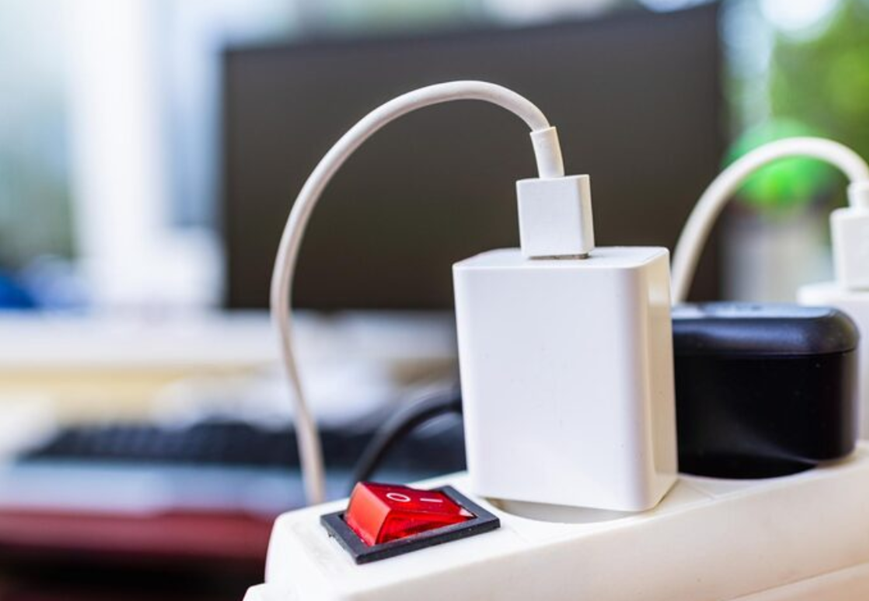
Compliant Phone Chargers Requirements in the US Market (FCC and Safety Rules)
The United States is one of the largest markets for consumer electronics, but it is also strict when it comes to safety and interference standards. Any Compliant Phone Chargers entering this market must follow FCC regulations, which focus on electromagnetic compatibility and safe operation.
For businesses involved in cross-border electronics distributors, the US market requires careful planning. Even small issues in design or testing can block entry.
Plug types and voltage standards in the United States
In the US, standard voltage is 120V, and plug types A and B are commonly used. This means Compliant Phone Chargers must be designed specifically for this electrical system. A charger built for Europe or the UK will not automatically work without modification.
Manufacturers like Celebrat often support OEM customization so that different versions of chargers can be produced for global markets. This is especially useful for businesses engaged in sourcing compliant chargers from China for multiple regions.
FCC compliance and what it actually covers for importers
FCC certification ensures that a charger does not interfere with other electronic devices. It is not just about performance, but also about safety in shared environments. For importers, working with reliable CE-certified electronics suppliers who also understand FCC requirements reduces risk and improves approval speed.
This raises an important point: while the US focuses on the FCC, Europe has an entirely different system. So what happens when we move into the EU market?
Compliant Phone Chargers Standards in the EU Market (CE Certification Explained)
The European Union has one of the most well-structured regulatory systems in the world. To sell Compliant Phone Chargers in this region, CE marking is mandatory. Without it, products cannot legally enter the market.
For cross-border electronics distributors, the EU market represents both opportunity and responsibility. Compliance is strict, but once achieved, it opens access to a large consumer base.
CE marking, RoHS, and what buyers must check
CE marking shows that a product meets EU safety, health, and environmental protection standards. However, many buyers do not realize that CE is not just a logo. It requires technical documentation, testing reports, and factory compliance.
RoHS compliance is also important because it restricts harmful substances in electronics. When working with CE-certified electronics suppliers, buyers must ensure all Compliant Phone Chargers include proper certification documents, not just printed labels.
This is especially important for businesses involved in sourcing compliant chargers from China, where documentation verification is a key step.
Common mistakes when sourcing for EU distribution
One common mistake is assuming that all chargers with CE marking are genuine. In reality, some products use fake or incomplete certification. Another mistake is ignoring plug compatibility. EU chargers typically use Type C or Type F plugs, which must match local infrastructure.
These issues can easily be avoided when working with experienced manufacturers who specialize in Compliant Phone Chargers for export markets.
But Europe is only one part of the equation. What about the UK after Brexit?
Compliant Phone Chargers Rules for the UK Market (UKCA and Plug Type G)
After Brexit, the United Kingdom introduced its own certification system known as UKCA. This directly affects how Compliant Phone Chargers are approved and sold in the UK market.
For cross-border electronics distributors, this means adapting to a slightly different compliance process compared to the EU.
UKCA certification explained in simple terms
UKCA marking is now required for most electronic products sold in Great Britain. It is similar to CE but has its own legal framework. Manufacturers must ensure that Compliant Phone Chargers meet UK safety standards before entering the market.
Working with experienced CE-certified electronics suppliers who also understand UKCA requirements can make the process much smoother for importers.
Why plug compatibility matters more than most buyers think
The UK uses Type G plugs, which are different from both the US and EU systems. This small detail can create big problems if ignored. A charger may be fully certified but still unusable if the plug is wrong.
This is why OEM customization is so important when producing Compliant Phone Chargers for global distribution.
So how do buyers avoid all these risks when sourcing from overseas suppliers?
How to Identify Reliable CE-Certified Electronics Suppliers in China
Choosing the right supplier is one of the most important steps in building a safe supply chain. Not all manufacturers offering Compliant Phone Chargers are equally reliable.
For cross-border electronics distributors, supplier verification is essential before placing large orders.
What real certification documents should look like
Authentic documentation includes test reports from recognized labs, detailed technical files, and traceable certification numbers. Reliable CE-certified electronics suppliers will always provide these without hesitation.
When working on sourcing compliant chargers from China, requesting full documentation is a standard practice.
Red flags when choosing cross-border electronics distributors
If a supplier avoids sharing test reports, offers unusually low prices, or cannot explain certification details, these are warning signs. Professional compliant phone charger production requires transparency and testing at every stage.

Why OEM/ODM Partners Are Key for Compliant Phone Chargers Success
OEM and ODM manufacturing play a major role in the global electronics trade. It allows buyers to customize Compliant Phone Chargers for different markets while maintaining compliance.
Customization for US, EU, and UK plug systems
With OEM/ODM support, one product line can be adapted into multiple versions for different regions. This is especially useful for OEM phone charger suppliers for EU, US UK markets, where plug type and certification must change by country.
How OEM/ODM helps reduce compliance failure rates
By integrating compliance into the design stage, manufacturers reduce the risk of failed certifications. This is why experienced cross-border electronics distributors prefer OEM partnerships.
Why Celebrat Is a Trusted Supplier of Compliant Phone Chargers
Celebrat has established itself as a reliable partner for global buyers looking for stable and certified production of Compliant Phone Chargers.
Manufacturing capability and export experience
With strong production systems and international experience, Celebrat supports large-scale orders while maintaining consistent quality and compliance standards.
Supporting cross-border electronics distributors with OEM/ODM solutions
From design to certification support, Celebrat helps cross-border electronics distributors reduce risk and scale efficiently in the US, EU, and UK markets.
Conclusion
In global trade, success is not just about product design. It is about trust, safety, and compliance. Choosing Compliant Phone Chargers ensures that your business can operate smoothly across the US, EU, and UK without unnecessary delays or legal risks.
Whether you are working with CE-certified electronics suppliers or expanding through cross-border electronics distributors, the right manufacturing partner makes all the difference. From FCC requirements in the US to CE and UKCA systems in Europe and the UK, every market demands attention to detail.
If you are planning to scale your product line or improve your supply chain reliability, partnering with an experienced OEM and ODM manufacturer is the smartest step forward.
For businesses ready to source reliable Compliant Phone Chargers and build a long-term cooperation model, Celebrat welcomes you to get in touch. Let’s discuss how we can support your next product line with safe, certified, and market-ready charging solutions tailored for the US, EU, and UK markets.
FAQs
1. What are Compliant Phone Chargers?
Compliant Phone Chargers are chargers that meet official safety and regulatory standards such as CE in the EU, FCC in the US, and UKCA in the UK. They ensure safe performance, proper electrical protection, and legal market access.
2. Why is CE certification important for chargers?
CE certification proves that a product meets European safety and environmental rules. It is essential for entering the EU market and is a key requirement when working with CE-certified electronics suppliers.
3. Can I use one charger for all regions?
Not directly. US, EU, and UK markets have different plug types and voltage systems, so chargers must be adapted through OEM/ODM manufacturing for full compliance.