
What “Low Latency” Actually Means for TWS Earbuds — and Why Wholesale Buyers Need to Care
Here’s the thing most buyers get wrong: “low latency” isn’t a single spec — it’s a spectrum, and where a product falls on that spectrum determines whether it belongs in a gaming bundle or gets returned inside a week.
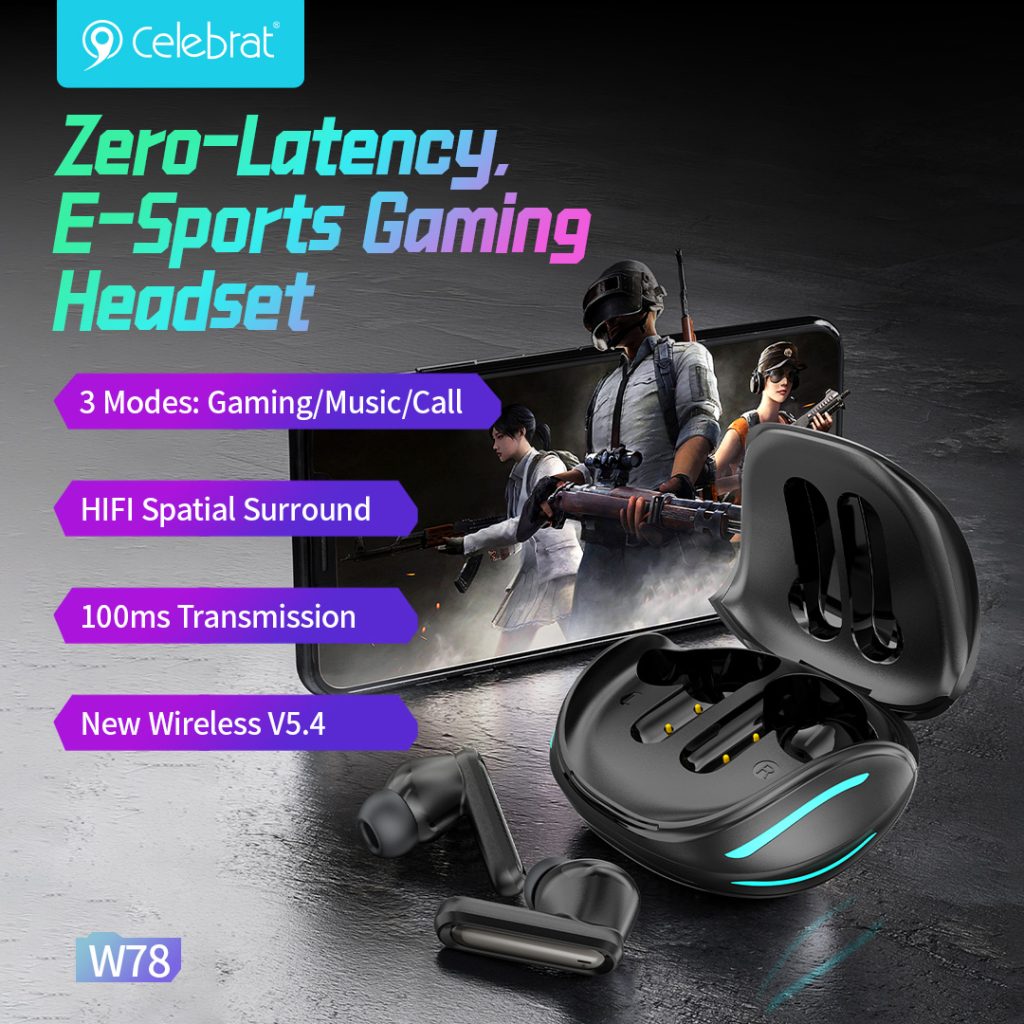
Latency, in the context of TWS earbuds, refers to the delay between an audio signal being sent from a source device and the listener actually hearing it. Standard Bluetooth audio — the kind you’d get from a generic pair with no special modes — typically sits somewhere between 150ms and 250ms. That’s fine for podcasts. For a mobile game where you’re reacting to gunshots, or a video call where lip-sync drift makes you feel slightly seasick? Not fine. Not even close.
So the industry started pushing “low latency” modes — usually pegged at 40ms to 60ms — which get there by switching codecs, reducing buffer sizes, and in some cases using proprietary transmission protocols. The tradeoff is sometimes battery drain or a slight compression in audio quality, but for the use cases that actually matter, most users won’t notice.
Now, why does any of this matter if you’re buying in volume? A few reasons — and they’re not subtle.
- Return rates spike when customers buy earbuds marketed for gaming and experience noticeable audio lag during gameplay.
- Retail shelf space is brutal; a product that generates complaints gets delisted fast.
- Younger consumers (the primary buyers of true wireless earbuds) are increasingly educated about specs and will absolutely post about latency issues online.
Brands operating at the serious end of the low latency TWS earbuds wholesale market — Celebrat among them — build latency performance into the product architecture from the design stage, not as a firmware afterthought. That distinction matters when you’re placing a 5,000-unit order and need the spec sheet to actually reflect real-world behavior.
Honestly, 40ms is the threshold worth benchmarking against. Below that, most users can’t detect lag at all — even in rhythm games. Above 100ms, the complaints start. That 60ms window in between is where most of the sourcing decisions you’ll make actually live.
How to Evaluate Low Latency TWS Earbuds Before Committing to a Wholesale Order
Spec sheets lie. Not always intentionally — but a quoted latency figure from a supplier deck and the actual lag a user experiences during a mobile gaming session are two very different things, and that gap will absolutely show up in your returns data.
So before you commit to a low latency TWS earbuds wholesale order at any meaningful volume, here’s the actual evaluation framework that holds up:
- Test with the right content type. Music playback will hide latency issues that video and gaming expose immediately. Always test with a latency-sensitive app — a rhythm game works perfectly — and run the test on both Android and iOS, since Bluetooth codec negotiation behaves differently across platforms.
- Verify which codec is doing the heavy lifting. If a supplier claims sub-40ms performance but the earbuds only support SBC, that number is fictional. Look for aptX Low Latency, AAC (on Apple devices), or a proprietary low-latency mode with documented handshake behavior.
- Check the gaming mode specifically. Many earbuds ship with a dedicated mode that trades audio quality for reduced latency. Confirm it’s accessible without navigating a convoluted app, and confirm the latency figure being advertised applies to that mode — not some theoretical best-case scenario.
- Ask for defect rate documentation. Suppliers operating at a serious manufacturing level — Celebrat’s parent company YISON, for example, maintains a sub-0.8% market defect rate backed by ISO 9001 certification — can actually produce this data. If a supplier can’t, that’s a flag.
- Run a batch test, not a single sample. Unit-to-unit consistency matters more than one perfect demo pair. Pull 10 units from the same production batch and test them all.
And honestly, the latency conversation doesn’t end at purchase. Firmware updates can shift performance — in either direction. Knowing whether a supplier supports post-sale firmware maintenance is part of evaluating the product’s long-term suitability for your market.
The low latency TWS earbuds wholesale category rewards buyers who test like skeptics. That’s just the reality of it.
Why CELEBRAT Low Latency TWS Earbuds Are a Smart Pick for Distributors and Resellers
So here’s the thing about sourcing decisions at scale: they’re rarely about one product. They’re about the whole relationship — reliability, margins, lead times, the headache factor when something goes wrong. That’s where Celebrat actually earns its position in the low latency TWS earbuds wholesale conversation, not just on spec sheets.

The numbers matter here. A sub-0.8% defect rate across a product line isn’t marketing copy — it’s the kind of figure that directly impacts your return logistics, your customer service overhead, and ultimately your reputation with retailers. CELEBRAT’s ISO 9001-certified production facility runs 100% final inspection on outgoing units, which means the variance between what you sample and what arrives in bulk is genuinely tight. (That consistency is rarer than you’d think at this price tier, honestly.)
And the SKU depth is real. With over 200 new products launched annually, distributors aren’t locked into one or two low latency models that might age out of trend quickly. You can restock what’s moving, pivot when the market shifts, and still maintain a coherent product story for your buyers. That kind of supply-side flexibility is worth a lot when you’re trying to hold shelf space in fast-moving retail environments.
Certifications aren’t glamorous. But they matter enormously for cross-border trade — CE for Europe, FCC for the US market, RoHS compliance across the board. CELEBRAT carries all of these, which removes a genuine obstacle for resellers trying to place product in regulated markets without dealing with customs complications or retailer compliance rejections.
Practical reach, too. The brand operates across 150+ countries through established distributor relationships, which means regional support infrastructure exists — not just a factory email address. For anyone sourcing low latency TWS earbuds wholesale at volume, that matters when you need firmware documentation, replacement units, or just a straight answer fast.
Not a perfect solution for every buyer. But for distributors who want consistent performance, clean paperwork, and a supplier that’s been building acoustic products since 1998? Hard to argue with the fundamentals.
Pricing, MOQs, and Margin Reality: What to Expect When Buying Low Latency TWS Earbuds in Bulk
Margins get weird fast in this category. That’s the honest truth — and most wholesale guides won’t tell you that upfront because they’re trying to sell you something.
Here’s the basic reality of sourcing low latency TWS earbuds wholesale: the technology premium is real, but it compresses as volume goes up. At low MOQs — think 100-300 units — you’re typically looking at per-unit costs in the $8–$18 USD range for decent gaming-grade latency specs (sub-60ms). Push past 500 units and that number starts to move. Not dramatically, but enough to matter when you’re pricing for retail at $35–$55 and trying to keep 40%+ gross margin intact after freight, duties, and the inevitable dead stock buffer you should absolutely be building into your model.
MOQ structures vary a lot by supplier type. Factory-direct minimums tend to sit lower on paper, but the hidden cost is tooling time, sampling delays, and QC that’s entirely on you. Established brand suppliers — Celebrat being one example — typically bundle compliance documentation and inspection protocols into the relationship, which means your landed cost calculation is cleaner even if the unit price looks slightly higher at first glance.
A few things to know before you commit to a bulk order:
- Confirm the latency spec is hardware-level, not just a marketing claim — ask for the Bluetooth chipset details and test mode documentation
- Factor in certification costs if the supplier doesn’t carry CE, FCC, or RoHS coverage (retail rejection at the door is expensive)
- Negotiate sample-to-bulk consistency clauses — what you test shouldn’t be different from what ships
- Understand the firmware update policy, especially for gaming SKUs where latency performance can drift between software versions
And don’t sleep on the payment term conversation. Net-30 or partial LC arrangements are available with suppliers who have established distributor networks — which is genuinely useful for cash flow when you’re moving a container of product.
Realistic margin target for this segment? 35–45% gross at mid-volume. Achievable. But only if your landed cost math is honest from the start.
Conclusion
The low latency TWS earbuds wholesale market is genuinely worth your attention right now — but only if you go in with rigorous sourcing discipline. Chipset transparency and sample-to-bulk consistency aren’t nice-to-haves; they’re the difference between a product line that builds repeat business and one that generates return freight.
Get the spec documentation before you wire a deposit. Full stop.
Brands that have already done the certification and firmware groundwork — the kind built on real acoustic manufacturing infrastructure, not just badge-slapping — are where your margin targets actually hold up. That’s the shortcut worth taking.
Frequently Asked Questions
Q: What latency spec should I actually look for when sourcing low latency TWS earbuds wholesale?
A: Anything at or below 60ms is genuinely usable for gaming and video sync — below 40ms is where buyers start marketing it as “ultra-low latency” with a straight face. The chipset matters more than the spec sheet number, though; ask specifically whether the unit runs a dedicated low-latency gaming mode or whether it’s just a firmware flag on a standard BT 5.0 chip. Those two things perform very differently in real use.
Q: How much MOQ should I expect when buying low latency TWS earbuds wholesale for the first time?
A: Most credible manufacturers sit between 500–1,000 units for a first order on a stocked model — drop below that and you’re often paying retail-adjacent pricing that kills your margin before you’ve shipped a single unit. Some brands with flexible supply chains (CELEBRAT runs this model) will negotiate lower entry MOQs if you’re committing to a longer-term SKU relationship, but that’s a conversation, not a given.
Q: Why do some low latency TWS earbuds wholesale listings show the same latency spec but perform completely differently?
A: Because “60ms latency” can be measured at the chipset level, at the audio output level, or just copy-pasted from a competitor’s listing — and suppliers don’t always clarify which. The gap between a Qualcomm aptX Low Latency implementation and a generic SoC claiming the same number can be 30–40ms in real-world testing. Always ask for the chipset model and cross-reference it independently.
Q: How do I verify sample-to-bulk consistency when ordering low latency TWS earbuds wholesale?
A: Request golden samples — sealed, production-line units, not hand-built prototypes — and have them tested against the spec doc before you approve bulk. Build a simple checklist: latency in gaming mode, connection range at 10m, call mic clarity, and charge cycle count. Third-party pre-shipment inspection (around $200–$300 per visit) is cheap insurance on orders above $15K.
Q: Is it worth paying more for TWS earbuds with Bluetooth 5.3 vs. 5.0 in a wholesale context?
A: For low latency performance specifically — yes, and here’s why: BT 5.3 introduces LE Audio and LC3 codec support, which cuts connection overhead and handles interference better in crowded RF environments (think retail floors, warehouses). The per-unit cost delta is usually $1.50–$3.00 at mid-volume, which is recoverable if your positioning supports it.
Q: Can I get custom branding on low latency TWS earbuds wholesale orders without a massive minimum?
A: OEM logo printing typically kicks in around 500–1,000 units; full custom housing molds are a different story — that’s tooling fees starting at $3,000–$8,000 depending on complexity. If you’re not ready for that investment, look for brands that offer private-label programs on existing certified molds — you get your branding without eating a tooling cost that takes 10,000 units to amortize.
Q: What certifications should low latency TWS earbuds have before I import them into the EU or US?
A: CE for Europe, FCC for the US — non-negotiable, and customs will hold your shipment without them. RoHS compliance matters too, especially for EU retail channels that require it at the product listing level. Suppliers who’ve already done this groundwork (and can hand you the actual cert documents, not just claim they exist) are worth paying a slight premium for; re-certifying yourself is expensive and slow.
Q: How long does it typically take to fulfill a low latency TWS earbuds wholesale order from a China-based manufacturer?
A: Stocked SKUs ship in 7–15 days after deposit confirmation — custom or semi-custom orders run 30–45 days, sometimes longer if there’s a component backlog on specific chipsets. Sea freight from Guangzhou to Europe adds another 25–35 days; air freight cuts that to 5–7 days but will eat 8–12% of your landed cost, so factor that into your margin math before you commit to a launch date. Related reference: TWS Earbuds with high cost-effectiveness in.